
How to Evaluate Transfection Reagents in Viral Vector Workflows
Why Transfection Reagent Selection Matters
At its core, transfection is the most critical step in determining success of upstream process development. Thus, selecting the right transfection reagent is one of the most important decisions in developing robust and scalable workflows for viral vector manufacturing. Whether the goal is producing AAVs or LVs, transfection efficiency and consistency directly influence productivity, process scalability, and overall downstream success.
Because no two workflows are identical, performance depends on a combination of cell line, plasmid design, culture conditions, and process scale. For this reason, systematic evaluation, using tools like our transfection reagent sampler kit, is essential.
How Transfection Reagent Chemistry Impacts Viral Vector Manufacturing
Transfection reagents are available in a range of chemistries, each with distinct mechanisms for complexing and delivering nucleic acids into cells. Common chemistries include polymer-based reagents such as polyethyleneimine (PEI), cationic lipid-based reagents, calcium phosphate-based systems, and some multi-component systems that integrate multiple chemistries to enhance performance. These reagents can differ significantly in their key performance attributes. As a result, a reagent that performs well in one workflow may not deliver the same results in another, underscoring the importance of evaluating multiple reagents during process development.
Small differences in transfection reagent chemistry or formulation can lead to meaningful changes in:
- Overall transfection efficiency
- Cell viability post-transfection
- Viral vector yield
- Batch-to-batch consistency
- Scalability from flask to bioreactor
Because of this sensitivity, reagent selection is not just a technical detail, but rather a process-defining variable.
Key Criteria for Transfection Reagent Selection
When comparing transfection reagents, it is important to move beyond single-point performance metrics and instead evaluate across multiple dimensions:
1. Transfection Efficiency
The ability of a reagent to consistently deliver plasmid DNA into target cells is foundational. However, percent transfection efficiency should always be interpreted alongside key metrics like viral particle titer (VP/mL), viral genome titer (VG/mL), percent full capsids, and functional titer (TU/mL).
2. Scalability and Reproducibility
A reagent that performs well at small scale must also demonstrate consistent behavior as process volumes increase, as scalability is often where differences between reagents become most apparent. Additionally, consistency across experiments and batches is critical to support reliable process development, successful technology transfer, and eventual manufacturing.
3. Impact on Downstream Processing
Transfection performance does not end at expression levels—it can also influence downstream outcomes. In AAV workflows, upstream conditions can impact critical quality attributes such as full-to-empty capsid ratios and overall vector heterogeneity. In addition, components introduced during transfection, including enhancers or excess plasmid DNA, may increase the burden on downstream purification and clearance processes.
As a result, evaluating transfection reagents through the lens of full workflow compatibility helps ensure that improvements achieved upstream translate into meaningful gains in downstream processing and overall product quality.
4. Process Economics
Beyond technical performance, transfection reagents should also be evaluated in the context of overall process economics. Rather than focusing solely on upfront reagent cost, a more meaningful metric is cost per dose or per batch at manufacturing scale, where factors such as reactor utilization and overall process efficiency have a much greater impact on total production cost.
Plasmid DNA is the primary cost driver in viral vector manufacturing. As a result, even modest gains in transfection efficiency can reduce DNA input requirements per batch, directly improving process economics and lowering cost of goods.
5. Regulatory Compliance
When evaluating transfection reagents, end-to-end manufacturing and regulatory requirements should be considered. RUO materials used in early process development should have a clear path forward to transition to clinical trials and commercialization. This includes the availability of phase-appropriate GMP reagents and where applicable, regulatory documentation such as a Drug Master File (DMF).
The Value of Side-by-Side Comparison
Because transfection performance is highly context-dependent, side-by-side evaluation remains one of the most effective ways to identify the optimal solution for a given workflow.
Rather than relying solely on published benchmarks or vendor specifications, direct comparison under user-defined conditions allows researchers and process developers to:
- Identify the best-performing reagent for their specific system
- Optimize conditions based on real experimental outcomes
- Reduce development time through data-driven selection
- Increase confidence in scale-up decisions
This approach is particularly valuable in viral vector workflows, where small improvements in transfection efficiency can translate into significant gains in overall productivity.
From Evaluation to Optimization
Once a suitable transfection reagent is identified, further optimization can focus on fine-tuning parameters such as DNA ratios, cell density, media, etc. often using a Design of Experiment (DOE) approach to systematically identify optimal conditions. In many cases, reagent selection provides the foundation upon which all subsequent process improvements are built.
As workflows move from early development into larger-scale production, having a well-characterized and reliable transfection system helps reduce variability and support smoother process transfer. For more information on the challenges of upstream AAV manufacturing, see “Navigating Upstream AAV Manufacturing Process Challenges in Next-Gen Bioprocessing”
Enabling Faster Reagent Selection
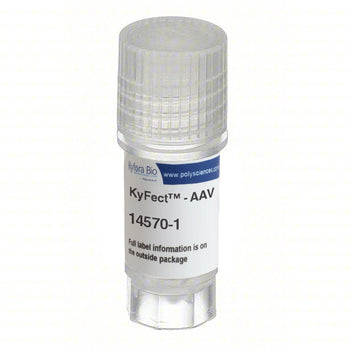
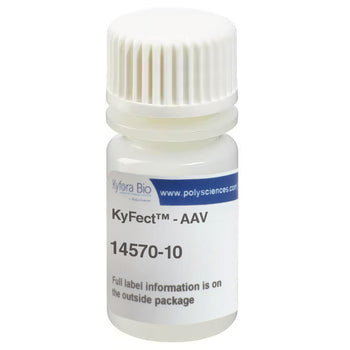
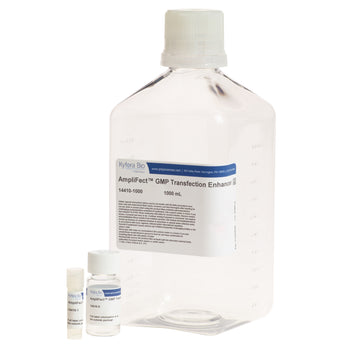
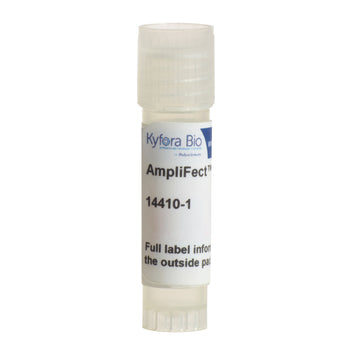
To support this evaluation process, Kyfora Bio has developed a Transfection Solutions Sampler Pack designed for direct, side-by-side comparison of multiple transfection reagents and enhancers within a single experimental workflow.
The sampler pack enables testing of up to 500 mL of cell culture and includes multiple transfection reagents and a transfection enhancer, allowing researchers to rapidly assess performance in their own systems.
By providing a simple, risk-free way to benchmark transfection performance, the sampler pack helps accelerate reagent selection and supports more efficient process development in viral vector manufacturing.
Click here to request your FREE Transfection Solutions Sampler Pack.