
Why Residual Testing Is Essential
Producing high quality viral vectors requires more than maximizing yield. Through upstream production and downstream purification, impurities are introduced that must effectively be removed before the final product can be used in a clinical setting. Even trace levels of these residual materials can affect the quality and safety of the final product.
Residual testing gives manufacturers and regulatory authorities the confidence that purification processes are performing as intended and that impurity levels remain within acceptable limits. It also serves as a valuable tool during process development, enabling comparison of purification strategies, process consistency, and technology transfer from development to manufacturing.
Rather than serving as a single release assay, residual testing is integrated within the viral vector manufacturing workflow to ensure impurities are identified, monitored, and controlled.
Understanding Residuals
Residual impurities can be introduced throughout viral vector manufacturing workflows, originating from both the production system and materials used during processing. Production cells naturally release host cell proteins and DNA during growth and harvest, while transient transfection and downstream processing introduce additional materials such as plasmid DNA, transfection reagents, and process additives.
Although downstream purification steps are designed to reduce these impurities, no purification process achieves complete removal of every residual component. Manufacturers therefore need to establish analytical testing strategies to characterize and monitor residual impurities, demonstrating that they are consistently controlled to acceptable levels throughout development and manufacturing.
The specific residuals evaluated depend on the vector type, manufacturing platform, and purification process, but the overall objective remains the same: ensuring product purity, quality, and consistency.
Common Residuals Monitored During Viral Vector Manufacturing
Although each viral vector manufacturing process presents unique challenges, several residual impurities are routinely evaluated during viral vector production workflows. Host cell-derived and process-derived materials represent two major classes of residual impurities monitored during viral vector manufacturing.
Host cell-derived impurities include host cell DNA, which is released during harvest, and host cell proteins, which can co-purify with viral vectors if downstream purification is insufficient.
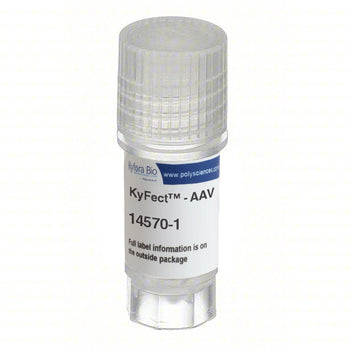
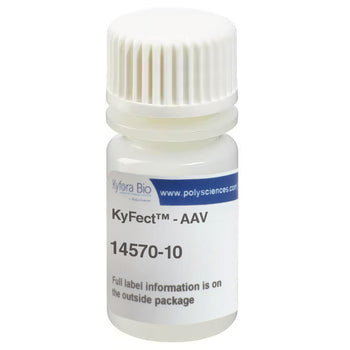
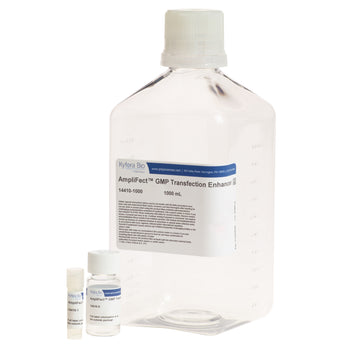
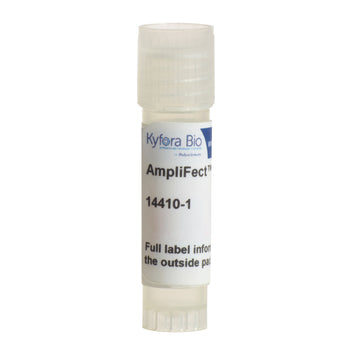
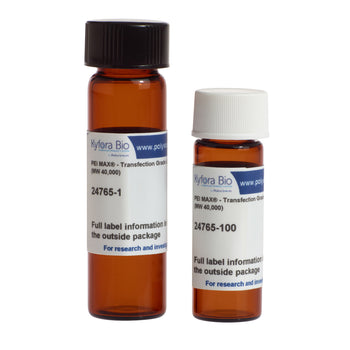
Process-derived impurities include residual plasmid DNA and transfection reagents introduced during transient transfection, as well as process enzymes such as Benzonase® used for nucleic acid digestion. Transfection reagents (ex. PEI, cationic lipids, and proprietary chemistries such as Kyfect™-AAV) as well as transfection enhancers (ex. AmpliFect™), can persist through downstream purification if not effectively removed. Depending on the manufacturing process, additional residuals, such as including media components, detergents, or chromatography ligands may also be evaluated as part of the overall analytical strategy.
Selecting the Right Analytical Methods
Because residual impurities differ significantly in their chemical and biological properties, no single analytical method can detect every contaminant. Instead, manufacturers use a combination of assays that together provide a comprehensive assessment of product purity.
PCR-based methods such as quantitative PCR (qPCR) and digital PCR (dPCR) are commonly used to quantify residual DNA, while enzyme-linked immunosorbent assays (ELISA) remain the standard approach for measuring host cell proteins and residual nucleases. Chromatographic techniques, including high-performance liquid chromatography (HPLC) and ion chromatography, may be used to detect and quantify process-related residuals such as transfection reagents or media components. Depending on the impurity and the required sensitivity, mass spectrometry and other techniques may also be incorporated into the testing strategy.
Selecting analytical methods that are both sensitive and specific allows manufacturers to confidently demonstrate impurity clearance while supporting process validation and regulatory submissions.
Supporting Product Quality and Regulatory Compliance
Residual impurity testing is required to meet regulatory compliance guidelines for viral vector manufacturing. Regulatory agencies expect manufacturers to identify potential process-related impurities, establish scientifically justified acceptance criteria, and demonstrate that residual levels are consistently minimized and tested from lot-to-lot. This requires analytical methods that are appropriately validated for their intended use and capable of detecting impurities at levels relevant to product safety and quality.
Residual testing also supports key regulatory activities beyond lot release. Data generated throughout process development, process characterization, and validation help demonstrate that downstream purification consistently removes impurities. Together, these data provide evidence of process robustness and support regulatory submissions while helping ensure the safety, purity, potency, and consistency of the final drug.
Building a Comprehensive Residual Testing Strategy
As viral vector manufacturing continues to advance toward commercial production, residual testing has become an integral part of analytical development rather than simply a release requirement. A comprehensive strategy combines appropriate analytical methods with an understanding of how various manufacturing inputs, process conditions, and purification steps can influence impurities and residual clearance.
For process-specific impurities, including residual transfection reagents and other proprietary components, access to specialized analytical expertise can be particularly valuable. Manufacturers may leverage internal capabilities, qualified testing partners, or support from technology providers with in-depth knowledge of the materials used in the production process. This product-specific expertise can support selection and development of the appropriate analytical assay to ensure accurate detection and quantification of residuals.
By integrating robust analytical testing with a well-designed purification strategy and appropriate process knowledge, manufacturers can improve process understanding, demonstrate impurity clearance, and confidently support the quality and consistency of their viral vector products.
Supporting Residual Testing for Transfection Reagents and Enhancers
Because transfection reagents and enhancers are critical components of viral vector manufacturing workflows, understanding their clearance profile is an important part of developing a robust residual testing strategy. Kyfora Bio provides residual testing services for its transfection reagents and enhancers, leveraging product-specific knowledge to support accurate detection and quantification of these process-related impurities.
By combining analytical expertise with an understanding of transfection reagent composition and performance characteristics, Kyfora Bio helps manufacturers evaluate residual levels, assess purification performance, and generate data to support process development and regulatory documentation.
To learn more about our residual testing service, click here.